Next-Generation Biomedical Research: The Impact of Genome Sequencing Technologies
Introduction to Modern Genome Sequencing
Over the last three decades, biomedical research has undergone a major transformation driven by rapid advances in genome sequencing technologies. The development of high-throughput sequencing platforms, often referred to as next-generation sequencing (NGS), has dramatically improved the speed, accuracy, and affordability of genetic analysis. What once required years of work and massive financial investment can now be achieved within hours, allowing scientists to investigate biological systems at an unprecedented scale.
Genome Sequencing as a Core Tool in Life Sciences
Genome sequencing technologies enable researchers to analyse the complete DNA sequence of organisms, including humans, animals, plants, viruses, and microorganisms. These approaches have revolutionized molecular biology by providing detailed insights into gene structure, genetic variation, cellular pathways, and disease mechanisms. Modern sequencing methods are now essential tools in genomics, transcriptomics, epigenetics, metagenomics, and precision medicine.

The Expansion of Genomic Data and Systems Biology
One of the most significant impacts of next-generation sequencing is the enormous increase in biological data generation. Large-scale sequencing projects produce terabytes of genomic information that can be used to identify mutations, study gene expression patterns, and explore molecular interactions within complex biological networks. This shift from single-gene analysis toward systems-level investigation has introduced a more holistic understanding of biological processes and disease progression.
Personalized Medicine and Clinical Applications
In clinical research, genome sequencing technologies have accelerated the development of personalized medicine. Researchers can now identify disease-associated genetic variants with high precision, enabling earlier diagnosis and more targeted therapeutic strategies. In oncology, for example, tumor sequencing helps detect specific mutations responsible for cancer progression, allowing physicians to select therapies adapted to the molecular profile of each patient. Similar approaches are increasingly applied in rare genetic disorders, infectious diseases, and pharmacogenomics.
Genome Sequencing in Infectious Disease Surveillance
Sequencing technologies have also transformed microbiology and infectious disease surveillance. During viral outbreaks, whole-genome sequencing allows rapid identification of emerging variants, transmission pathways, and evolutionary dynamics. This capability became especially important during recent global epidemics, where genomic monitoring supported public health responses and vaccine development strategies.


Bioinformatics and Scientific Data Infrastructure
The expansion of genomic research has created new challenges related to data management, computational analysis, and scientific infrastructure. Modern sequencing platforms generate massive datasets that require advanced bioinformatics tools, high-performance computing systems, and secure data-sharing networks. As a result, collaborative scientific infrastructures have become essential for managing and interpreting genomic information efficiently. International databases, cloud computing technologies, and integrated research platforms now support large-scale cooperation between laboratories, universities, hospitals, and biotechnology companies worldwide.


Ethical and Technological Challenges
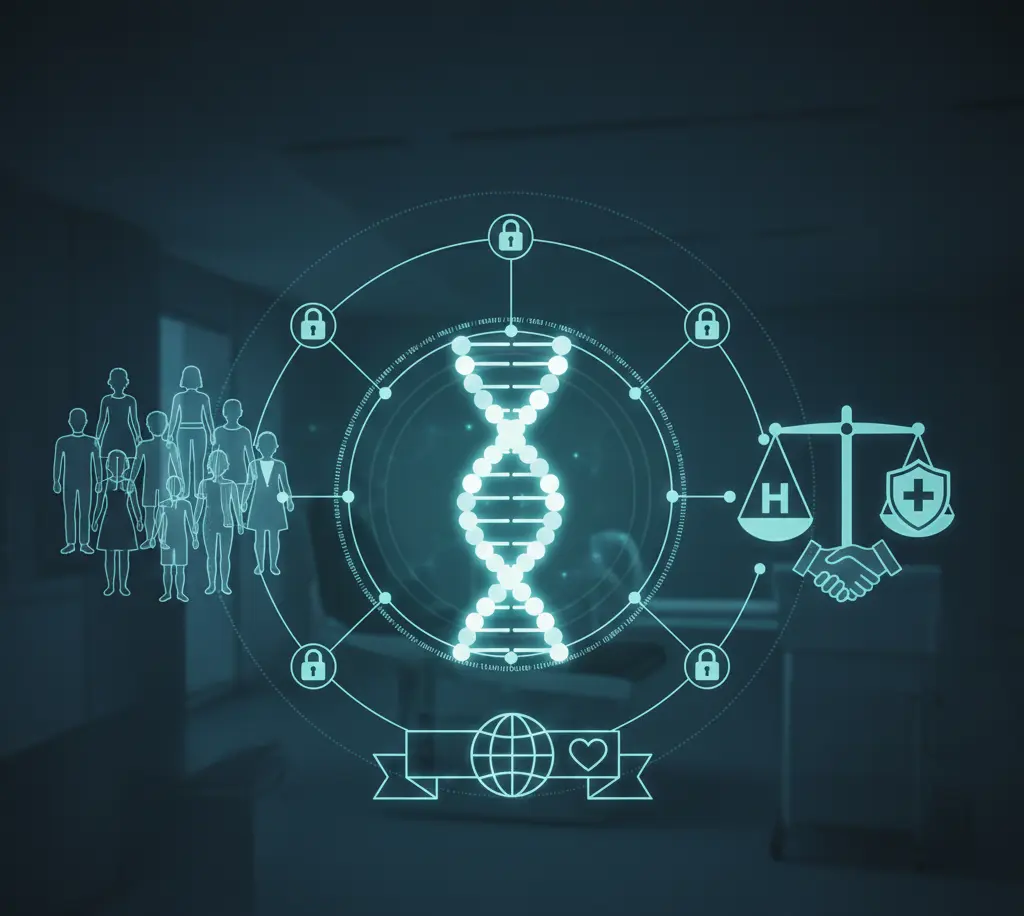
Despite these advances, several challenges remain. Ethical considerations involving genetic privacy, data security, and equitable access to sequencing technologies continue to be major concerns in biomedical research. Furthermore, the interpretation of genomic variants remains complex, especially when studying multifactorial diseases influenced by both genetic and environmental factors.
Artificial Intelligence and Computational Genomics
Artificial intelligence and machine learning are increasingly integrated with sequencing technologies to improve genomic interpretation. Computational models can analyse complex datasets, predict functional genetic variants, and identify hidden biological patterns that may not be detectable through conventional methods. The combination of genomics and computational biology is therefore accelerating biomarker discovery, drug development, and systems biology research.